Mathematical morphology (MM) is a theory and technique for analyzing and processing geometrical structures. It's based on set theory, lattice theory, topology, and random functions. MM is most commonly applied to digital images, but it can be employed as well on graphs, surface meshes, solids, and many other spatial structures. Topological and geometrical continuous-space concepts such as size, shape, convexity, connectivity, and geodesic distance, were introduced by MM on both continuous and discrete spaces. MM is also the foundation of morphological image processing, which consists of a set of operators that transform images according to the above characterizations. The basic morphological operators are erosion, dilation, opening and closing. MM was originally developed for binary images, and was later extended to grayscale functions and images. The subsequent generalization to complete lattices is widely accepted today as MM's theoretical foundation. == History == Mathematical Morphology was developed in 1964 by the collaborative work of Georges Matheron and Jean Serra, at the École des Mines de Paris, France. Matheron supervised the PhD thesis of Serra, devoted to the quantification of mineral characteristics from thin cross sections, and this work resulted in a novel practical approach, as well as theoretical advancements in integral geometry and topology. In 1968, the Centre de Morphologie Mathématique was founded by the École des Mines de Paris in Fontainebleau, France, led by Matheron and Serra. During the rest of the 1960s and most of the 1970s, MM dealt essentially with binary images, treated as sets, and generated a large number of binary operators and techniques: Hit-or-miss transform, dilation, erosion, opening, closing, granulometry, thinning, skeletonization, ultimate erosion, conditional bisector, and others. A random approach was also developed, based on novel image models. Most of the work in that period was developed in Fontainebleau. From the mid-1970s to mid-1980s, MM was generalized to grayscale functions and images as well. Besides extending the main concepts (such as dilation, erosion, etc.) to functions, this generalization yielded new operators, such as morphological gradients, top-hat transform and the Watershed (MM's main segmentation approach). In the 1980s and 1990s, MM gained a wider recognition, as research centers in several countries began to adopt and investigate the method. MM started to be applied to a large number of imaging problems and applications, especially in the field of non-linear filtering of noisy images. In 1986, Serra further generalized MM, this time to a theoretical framework based on complete lattices. This generalization brought flexibility to the theory, enabling its application to a much larger number of structures, including color images, video, graphs, meshes, etc. At the same time, Matheron and Serra also formulated a theory for morphological filtering, based on the new lattice framework. The 1990s and 2000s also saw further theoretical advancements, including the concepts of connections and levelings. In 1993, the first International Symposium on Mathematical Morphology (ISMM) took place in Barcelona, Spain. Since then, ISMMs are organized every 2–3 years: Fontainebleau, France (1994); Atlanta, USA (1996); Amsterdam, Netherlands (1998); Palo Alto, CA, USA (2000); Sydney, Australia (2002); Paris, France (2005); Rio de Janeiro, Brazil (2007); Groningen, Netherlands (2009); Intra (Verbania), Italy (2011); Uppsala, Sweden (2013); Reykjavík, Iceland (2015); Fontainebleau, France (2017); and Saarbrücken, Germany (2019). =
Read Along
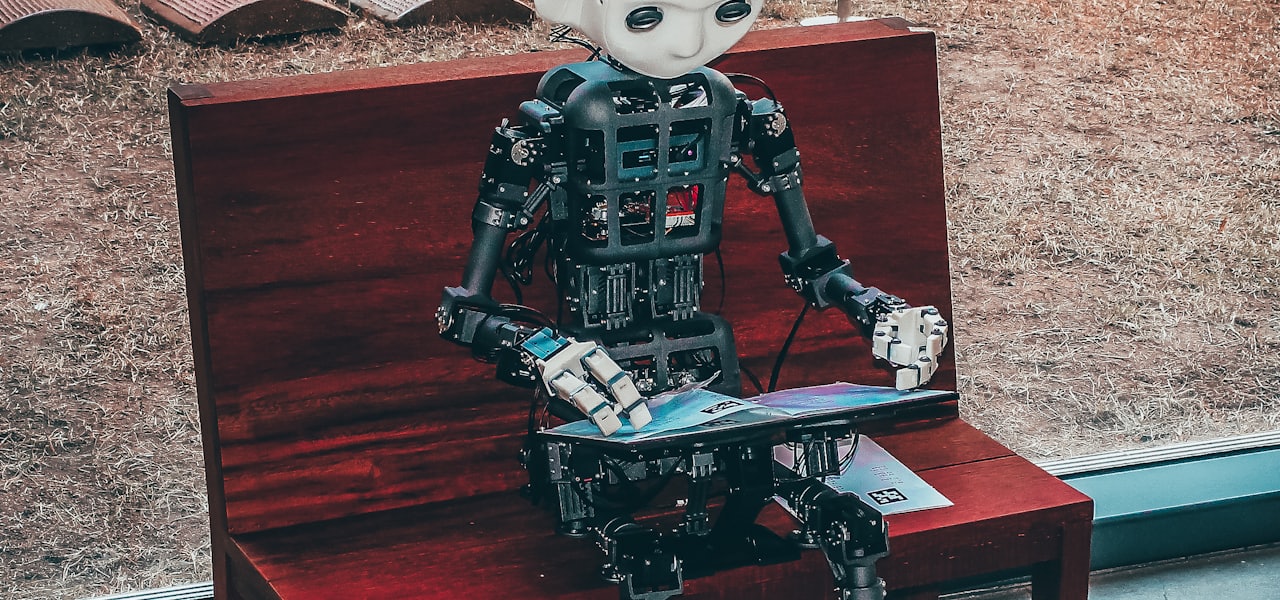
Read Along, formerly known as Bolo, is an Android language-learning app for children developed by Google for the Android operating system. The application was released on the Play Store on March 7, 2019. It features a character named Diya helping children learn to read through illustrated stories. It has the facility to learn English and Indian major languages i.e. Hindi, Bengali, Tamil, Telugu, Marathi and Urdu, as well as Spanish, Portuguese and Arabic. == Technology == The app uses text-to-speech technology, through which the character named Dia reads the story, as well as speech-to-text technology, which mechanically identifies the matches between the text and the reading of the user. The story of Chhota Bheem and Katha Kids was added in September 2019. In April 2020, a new version of the application was released. In September 2020, it added Arabic language to its language option. A web version was launched in August 2022.
Brooklyn Bridge (software)
The Brooklyn Bridge from White Crane Systems was a data transfer enabler. Although it came with some hardware, it was the software which was the basis of the product. It also could transform the data's format. == Overview == The New York Times described its category as being among "communications packages used to transfer files." In an era of 300 baud, Brooklyn Bridge operated at "115,200 baud" so that a transfer which "at 300 baud took 4 minutes and 36 seconds" only needed 5 seconds. Unlike some communications packages, this one retains the original version-date, so as not to alarm people when they seem to have what looks like an update, when it's not. == Description == Once the software is installed, users comfortable with typing the word "COPY" can do so as readily as they sneakernet. An earlier review described it as "less cumbersome than conventional communications software" The use of neither specialized hardware nor specialized software is ideal in an era when this can be done using online or other "outside" services.
ACTS Gigabit Satellite Network
The ACTS Gigabit Satellite Network was a pioneering, high-speed communications satellite network in the years 1993-2004, created as a prototype system to explore high-speed networking of digital endpoints. The system was jointly sponsored by NASA and ARPA, implemented by BBN Technologies and Motorola, and was inducted into the Space Technology Hall of Fame in April 1997. The Advanced Communications Technology Satellite (ACTS) network was designed to provide fiber-compatible SONET service to remote nodes and networks through a wideband satellite system, and provided long-haul, point-to-point and point-to-multipoint full-duplex SONET services, at rates up to 622 Mbit/s, over NASA's Advanced Communication Technology Satellite (ACTS). The Advanced Communications Technology Satellite itself, built and operated by Lockheed Martin, was launched on STS-51 on September 12, 1993, by the Space Shuttle Discovery, and occupied a geostationary orbit at 100° west longitude. It was the first communication satellite to operate in the 20–30 GHz frequency band (Ka band), with 30 GHz uplink and 20 GHz downlink signals. The satellite incorporated advanced on-board switching and multiple dynamically-hopping spot-beam antennas for selected areas of the United States including Hawaii. Up to 3 uplink and 3 downlink antenna beams could be active simultaneously. The ACTS network ground terminals were transportable Gigabit Earth Stations (GES) with fiber-optic SONET interfaces (OC-3 and OC-12), which also supported the Asynchronous Transfer Mode (ATM) protocol suite. The network control and management functions are distributed in the various Gigabit Earth Stations, with the operator's interface being centralized in a Network Management Terminal (NMT), which could be collocated at a GES, or anywhere in the Internet. The system was operational and used for experiments for 127 months, instead of the originally planned 24–48 months. In all, 53 terminals were built and used by more than 100 experimenters to test ACTS abilities. In Nov. 1997 a record data rate of 520 Mbit/s TCP/IP throughput was achieved using ATM between several ground stations via ACTS. On May 31, 2000 the ACTS experiments program officially came to a close, but the system continued to support experiments until it was deactivated on April 28, 2004.
Data room
Data rooms are secure spaces used for housing data, usually of a privileged or confidential nature. They can be physical data rooms, virtual data rooms (VDRs), or data centers. They are primarily used for a variety of corporate purposes, including data storage, document exchange, file sharing, financial transactions, and legal proceedings. Today, data rooms are central to workflows in mergers and acquisitions, venture capital, and corporate restructuring, increasingly utilizing artificial intelligence to securely manage and review large datasets. Historically, data rooms were strictly physical locations heavily guarded and monitored. Today, the vast majority of corporate data rooms are hosted virtually on secure cloud platforms, though physical rooms are still occasionally used for highly sensitive government or proprietary intelligence. == Physical Data Rooms == In mergers and acquisitions (M&A), the traditional data room genuinely consists of a physically secured and continually monitored room, normally in the vendor's offices or those of their legal counsel. Bidders and their advisers visit this room in order to inspect and report on various documents, legal contracts, and financial statements made available during the due diligence process. Historically, physical data rooms presented significant logistical challenges. Often, only one bidder at a time was allowed to enter to maintain document integrity and confidentiality. If new documents or new versions of documents were required, they had to be brought in by courier as hardcopies. Teams involved in large due diligence processes typically had to be flown in from many regions or countries and remain available throughout the process. Because these teams comprised a number of experts in different fields—such as legal counsel, forensic accountants, and industry specialists—the overall cost of keeping such groups on call near the physical data room was often extremely high. == Virtual Data Rooms (VDRs) == To address the costs and logistical bottlenecks of physical data rooms, virtual data rooms (VDRs) were developed to provide secure, online dissemination of confidential information. A VDR is essentially a secure cloud repository with strictly controlled access. Access is managed through secure log-ons supplied by the vendor or authority, which can be disabled at any time if a bidder withdraws from a transaction. Because much of the information released during corporate transactions is highly confidential, VDRs utilize digital rights management (DRM) to control information. Restrictions are applied to the viewers' ability to release data to third parties by disabling forwarding, copying, or printing capabilities. Modern VDRs also employ dynamic watermarking and detailed auditing capabilities. Detailed auditing is required for legal reasons so that a precise digital footprint is kept of who has viewed which version of each document, and for how long. Furthermore, modern VDR platforms are typically built to comply with stringent information security standards such as ISO 27001 and SOC 2. Transitioning from sequential physical data rooms to parallel virtual data rooms has been shown to significantly reduce the duration of M&A transactions while allowing sellers to field multiple bidders simultaneously. == Key Applications == Data rooms are commonly used by legal, accounting, investment banking, and private equity firms. Primary applications include: Mergers and Acquisitions (M&A): VDRs are central to the sell-side M&A process. After potential buyers sign a Non-Disclosure Agreement (NDA) and review a Confidential Information Memorandum (CIM), they are granted data room access to perform deep financial due diligence, such as Quality of Earnings (QoE) analysis and legal liability assessments. Venture Capital and Startups: Startups use data rooms as a centralized location for key operational data, capitalization tables, and financial projections to streamline due diligence for angel investors and venture capital firms during fundraising rounds. Initial Public Offerings (IPOs): Taking a company public requires intense regulatory scrutiny. Data rooms are used to securely share company histories and financial audits with investment bankers, legal teams, and regulatory bodies. Corporate Restructuring and Insolvency: During bankruptcies or corporate carve-outs, data rooms are used to organize outstanding debt profiles, creditor agreements, and operational liabilities. == Emerging Technologies == In recent years, the management of virtual data rooms has increasingly incorporated Artificial Intelligence (AI) and Machine Learning (ML). Generative AI and Natural Language Processing (NLP) tools are now integrated into VDRs to automatically index thousands of documents, perform auto-redaction of personally identifiable information (PII), and assist buy-side analysts in identifying hidden liabilities within unstructured text data during the due diligence phase. Modern AI algorithms can extract line items from financial statements to instantly populate structured databases.
Reference Software International
Reference Software International, Inc. (RSI), was an American software developer active from 1985 to 1993 and based in Albuquerque, New Mexico, and San Francisco, California. The company released several productivity and reference software packages, including the Grammatik grammar checker, for MS-DOS. The company was acquired by WordPerfect Corporation in 1993. == History == === Background (1980–1985) === Reference Software International, Inc., was founded by Donald "Don" Emery and Bruce Wampler in 1985 in San Francisco, California. Both Wampler and Emery were college professors when they founded RSI: Wampler at the University of New Mexico as a professor of computer science and Emery a professor of marketing at San Francisco State University. After graduating from the University of Utah in around 1978, Wampler founded his first software company, Aspen Software, in Tijeras, New Mexico, in 1979. Wampler founded Aspen to develop an early spell checker software package, called Proofreader, for the TRS-80, licensing Random House's Webster's Unabridged Dictionary for the package's lexicon. In 1980, he began development on a grammar checker inspired by Writer's Workbench, a pioneering grammar checker for Unix systems. Wampler used Writer's Workbench heavily during the writer of his doctoral dissertation but disliked having to jump between the Apple II on which he composed the dissertation and the mainframe on which Writer's Workbench ran, and so wanted to develop a version of the latter for microcomputers. Wampler's work came to fruition as Grammatik in 1981, eventually ported to several other microcomputer platforms in the early 1980s. In 1983, by which point the company had 12 employees and sold a combined 80,000 units of Grammatik and Proofreader, Wampler sold Aspen to Dictronics, a software company best known for developing the Electronic Thesaurus, an early thesaurus program for microcomputers. Dictronics was in turn purchased by Wang Laboratories; according to Wampler, "Wang bought [Aspen] and sat on it. They did nothing with it". Wampler moved on to teach for the University of New Mexico, but, frustrated by Wang's inaction, got the urge to resurrect his work. In 1985, he was able to license back Grammatik and Proofreader from a small California-based software firm that had grandfathered rights to a forked version of both. In the same year, he met Emery, who, impressed by Wampler's, founded Reference Software International to market his software. RSI's research and development headquarters were based in Albuquerque, while the company's sales and marketing department was based in Walnut Creek, California. === Success (1985–1992) === In August 1985, RSI released their first product: the Random House Reference Set, a new version of Proofreader for the IBM Personal Computer and compatibles, revised to be a terminate-and-stay-resident program that ran atop other word processors such as WordStar or WordPerfect. At the time, Reference Set was the only such program on the market that functioned like this. RSI netted $114,000 from sales of Reference Set by the end of 1985. In June 1986, they released version 2.0 of Grammatik as Grammatik II for the PC. The latter was a breakout hit for RSI, receiving praise in the press (including technology journals such as PC Magazine) and RSI selling 1,000 units a month. In spring 1987, they released Reference Set II, which allowed users to import their own words into the built-in dictionary and added a thesaurus of 300,000 words. In November 1987, they released version 3.0 of Reference Set, which comprised two new field-specific dictionaries for the medical and legal professions. As well as the general Random House dictionary and thesaurus, it included Stedman's Medical Dictionary and Black's Law Dictionary. Emery consulted Paul Brest and Bob Jackson—professors of law at Stanford Law School and San Francisco State respectively—for the curation of the law dictionary; and Burton Grebin—at the time the executive director of Mount Saint Mary's Hospital—for the curation of the medical dictionary. In fall 1988, the company released Grammatik III, a total rewrite that made use of artificial intelligence to more accurately judge the grammar of sentences by breaking them down into a syntactic hierarchy. Grammatik III received universal acclaim, with Gloria Morris of InfoWorld calling it the apparent leader in the grammar checking field and Sandra Anderson of Mac Home Journal calling it "hands down ... the best of the industry" six years after its release. By 1989, the product had competitors in Correct Grammar by Lifetree Software and RightWriter by Rightsoft, Inc. By 1990, RSI achieved annual sales of $9.7 million. In the same year they released Grammatik IV, which was the first to offer direct integration with WordPerfect on both MS-DOS and Windows. In March 1992—by which point RSI had sold 1.5 million copies of Grammatik across all versions—the company released version 5 of the program, another rewrite that updated the lexicon further and added new functions such as word redundancy detection. Around the same time, the company introduced Easy Proof, a pared-down version of Grammatik intended for novice writers, students, and family computers. In 1991, the company was engaged in a trademark dispute with Systems Compatibility Corporation (SCC) of Chicago, Illinois, over the rights to the Software Toolkit title. Both companies had published software bundles bearing the name in the turn of the 1990s; SCC had published theirs first in 1988 and registered the trademark with the USPTO. SCC was granted a restraining order against RSI in January 1991. The following month, RSI agreed to rename their product, preventing a protracted legal battle. === Decline and acquisition (1992–1993) === By early 1992, RSI achieved annual sales of more than $13 million, employed 120 people, and had opened international offices in London, Belgium, and Antwerp to sell foreign versions of Reference Set and Grammatik. The company reached peak employment in the middle of 1992, with 140 employees. However, RSI's launch of six disparate titles in the year proved problematic for the company when they failed to sell as well as they had projected, and the company laid off employees by the dozens. By December 1992, only 71 employees were left, 32 from their San Francisco office. On the last day of 1992, RSI received an acquisition offer from WordPerfect Corporation, makers of the namesake word processor based in Orem, Utah. The deal was inked in January 1993, RSI's stakeholders receiving $19 million. The company's remaining employees were absorbed into WordPerfect in Orem. WordPerfect continued selling Grammatik as a standalone product for several years.
Telenet
Telenet was an American commercial packet-switched network which went into service in August 16, 1975. It was the first FCC-licensed public data network in the United States. Various commercial and government interests paid monthly fees for dedicated lines connecting their computers and local networks to this backbone network. Free public dialup access to Telenet, for those who wished to access these systems, was provided in hundreds of cities throughout the United States. == History == After establishing that commercial operation of "value added carriers" was legal in the U.S., Bolt Beranek and Newman (BBN), who were the private contractors for constructing packet switching nodes (Interface Message Processor) for the ARPANET, set out to create a private sector version. The original founding company, Telenet Inc., was established by BBN. In January 1975, Telenet Communications Corporation announced that they had acquired the necessary venture capital after a two-year quest. Initially, Bob Kahn was the first President of Telenet; he then moved to ARPA as Larry Roberts left to become President of the company. Barry Wessler also joined from ARPA. On August 16 of the same year they began operating the first public data network. The network offered an email service called Telemail. Telenet had its first offices in downtown Washington, D.C., then moved to McLean, Virginia. It was acquired by GTE in 1979, and then moved to offices in Reston, Virginia. It was later acquired by Sprint and called "Sprintnet". Sprint migrated customers from Telenet to the modern-day Sprintlink IP network, one of many networks composing today's Internet. == Coverage == Originally, the public network had switching nodes in seven US cities: Washington, D.C. (network operations center as well as switching) Boston, Massachusetts New York, New York Chicago, Illinois Dallas, Texas San Francisco, California Los Angeles, California The switching nodes were fed by Telenet Access Controller (TAC) terminal concentrators both colocated and remote from the switches. By 1980, there were over 1000 switches in the public network. At that time, the next largest network using Telenet switches was that of Southern Bell, which had approximately 250 switches. In 1977, Telenet added a London node and a Network Control Centre in a London building of Britain's Post Office Telecommunications. == Internal network technology == Telenet initially used a proprietary virtual connection host interface. The network used statically defined hop-by-hop routing, using Prime commercial minicomputers as switches, but then migrated to a purpose-built multiprocessing switch based on 6502 microprocessors. Among the innovations of this second-generation switch was a patented arbitrated bus interface that created a switched fabric among the microprocessors. By contrast, a typical microprocessor-based system of the time used a bus; switched fabrics did not become common until about twenty years later, with the advent of PCI Express and HyperTransport. Most interswitch lines ran at 56 kbit/s, with a few, such as New York-Washington, at T1 (i.e., 1.544 Mbit/s). Originally, the switching tables could not be altered separately from the main executable code, and topology updates had to be made by deliberately crashing the switch code and forcing a reboot from the network management center. Improvements in the software allowed new tables to be loaded, but the network never used dynamic routing protocols. Multiple static routes, on a switch-by-switch basis, could be defined for fault tolerance. Network management functions continued to run on Prime minicomputers. Roberts and Barry Wessler joined the international effort to standardize the a protocol for packet-switched data communication based on virtual circuits shortly before it was finalized. The CCITT proposal for X.25 was being prepared by Rémi Després and other international experts. A few minor changes, which complemented the proposed specification, were accommodated to enable Telenet to join the agreement. Telenet adopted X.25 shortly after the protocol was published in March 1976. Its X.25 host interface was the first in the industry. The main internal protocol was a proprietary variant on X.75; Telenet also ran standard X.75 gateways to other packet switching networks. == Accessing the network == === Basic asynchronous access === Users could use modems on the Public Switched Telephone Network to dial TAC ports, calling either from "dumb" terminals or from computers emulating such terminals. Organizations with a large number of local terminals could install a TAC on their own site, which used a dedicated line, at up to 56 kbit/s, to connect to a switch at the nearest Telenet location. Dialup modems supported had a maximum speed of 1200 bit/s, and later 4800 bit/s. For example, a customer in NYC could dial into the local number, then type in a command similar to: which would connect (that "c") them to a computer system designated as number "555" located in the same vicinity as the standard telephone "area code" 301. One significant customer was an early (what would now be called) internet service provider The Source which had their equipment in Mclean, Va. Telenet offered a much lower nighttime rate when there were few corporate customers, and this let The Source set up a modestly priced offering to tens of thousands of customers. Another prominent customer in the 1980s was Quantum Link (now AOL). === Other access protocols === Telenet supported remote concentrators for IBM 3270 family intelligent terminals, which communicated, via X.25 to Telenet-written software that ran in IBM 370x series front-end processors. Telenet also supported Block Mode Terminal Interfaces (BMTI) for IBM Remote Job Entry terminals supporting the 2780/3780 and HASP Bisync protocols. === PC Pursuit === In the late 1980s, Telenet offered a service called PC Pursuit. For a flat monthly fee, customers could dial into the Telenet network in one city, then dial out on the modems in another city to access bulletin board systems and other services. PC Pursuit was popular among computer hobbyists because it sidestepped long-distance charges. In this sense, PC Pursuit was similar to the Internet, allowing any user to call any system as if it were local. On connection to the network, the user entered a 5-letter code for the target city they wished to call. This consisted of a 2-letter state code and a 3-letter acronym for the city. For instance, to call a system in Cleveland, Ohio, the user would enter the code OHCLV, for "OHio", "CLeVeland". Once connected, the user could dial out to any local number, and the system simulated a direct connection between the two endpoints.